
November 2024
Finding Joe – A Kayak Adventure into the Heart of Fiordland
Hear from Mike Dawson, The North Face Adventure Grant recipient for 2024, who put a team of young kayakers together to introduce them to the world of backcountry kayaking in New Zealand’s wilderness.
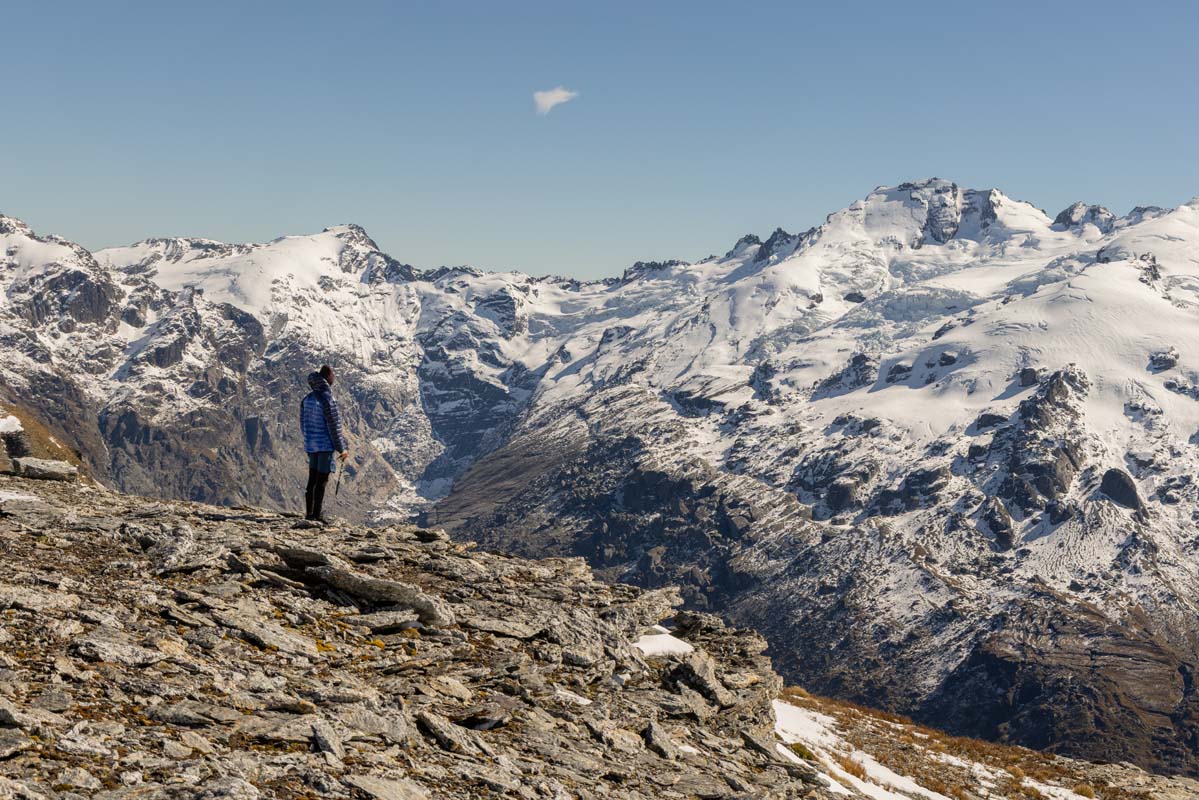
The allure of the Joe River is compelling – it is a known river, but barely explored. The river drains the Olivine Ice Plateau, hidden deep in the Mount Aspiring National Park, in one of New Zealand’s most remote zones. The inability to drive or fly in makes the access to the whitewater gorges a human powered 3 – 4 day portage that crosses the Barrier Range. For us, this expedition was all about exploring somewhere off track, and taking a journey to a river a little further into the wild.
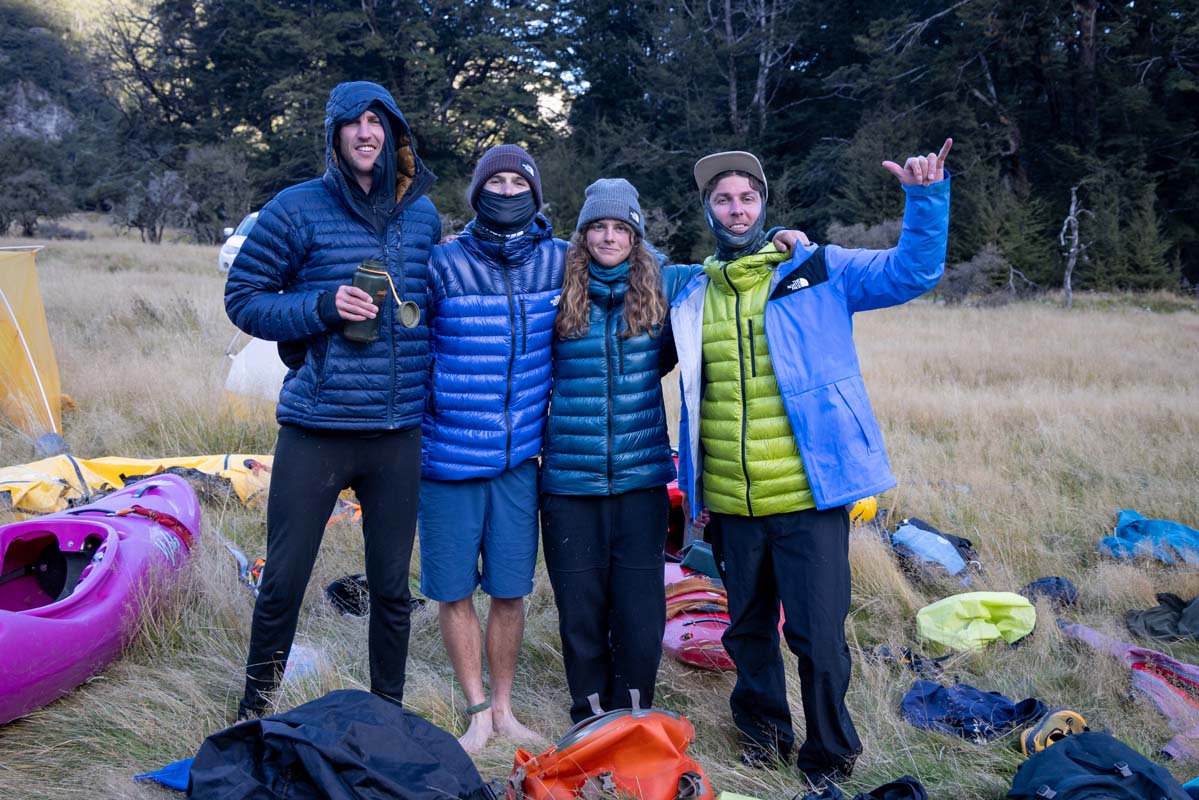
Logistics and planning are critical before embarking on an adventure like this. Even more so with a team made up of a wide range of experience. For River and George this was their first real foray into the backcountry. As the sun set on the 27 of March, the team was packing and repacking, working on establishing the perfect mix of weight to equipment ratio. We needed to be fully self-sufficient, with enough food for 8 days, kayak equipment, safety gear, and alpine equipment. All up, we were going to be carrying upwards of 45 - 50 kgs on our backs to make this multi discipline possible — and we weren’t even sure everything would fit.
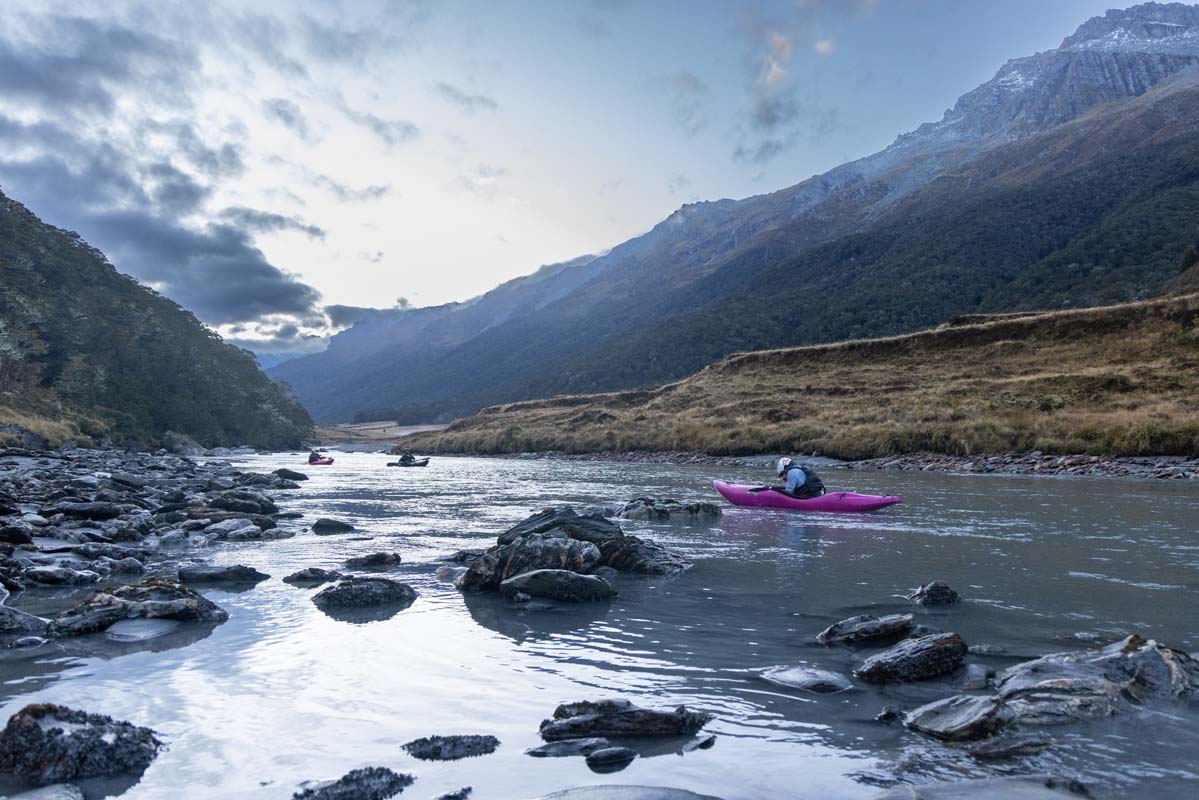
The plan was simple, travel upstream using the Dart River as a path into the remote zone, before crossing the river and attempting to climb over the Barrier Range traversing the back of Mt Frobisher and dropping into the Joe River. From here we’d enter the river making our way through 3 gorges before following the Arawhata River and paddling out to the West Coast of the South Island. In the early hours of the 28 March, the team including River Mutton, Mike Dawson, and George Snook, headed up the Dart River loaded for the 7-day expedition. As the sun rose on the first day, it exposed the recent snowfall evident on the alpine ridges, significantly more than had been forecast casting a doubt in the back of our minds.
“Arriving at Chinamans Bluff, just out of Glenorchy, I began to get a sense of the magnitude of the undertaking ahead of us. My kayak was loaded, I could barely get it off the ground. Huge peaks were blanketed with snow. It was a daunting moment heading off.” – Mike Dawson
We travelled upstream 26 km to the base of O’Learys Pass, hiking our boats on our shoulders or dragging them up the riverbed. The physical crux of the trip was the climb out of the Dart River towards Mt Frobisher and O’Learys Pass — our gateway to the Olivine, to the Joe River. A big push through the bush up into the alpine area and we were aware that we were traveling slower than expected due to the load, and how difficult it was to move the boats through the thick bush. Combining that with the significant amount of snow on the ridge, the best option was for us to scout the route of the pass and assess if this was even possible.
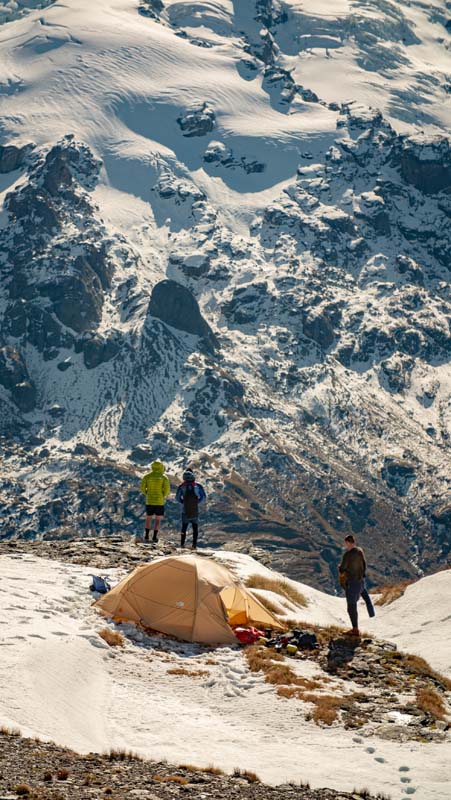
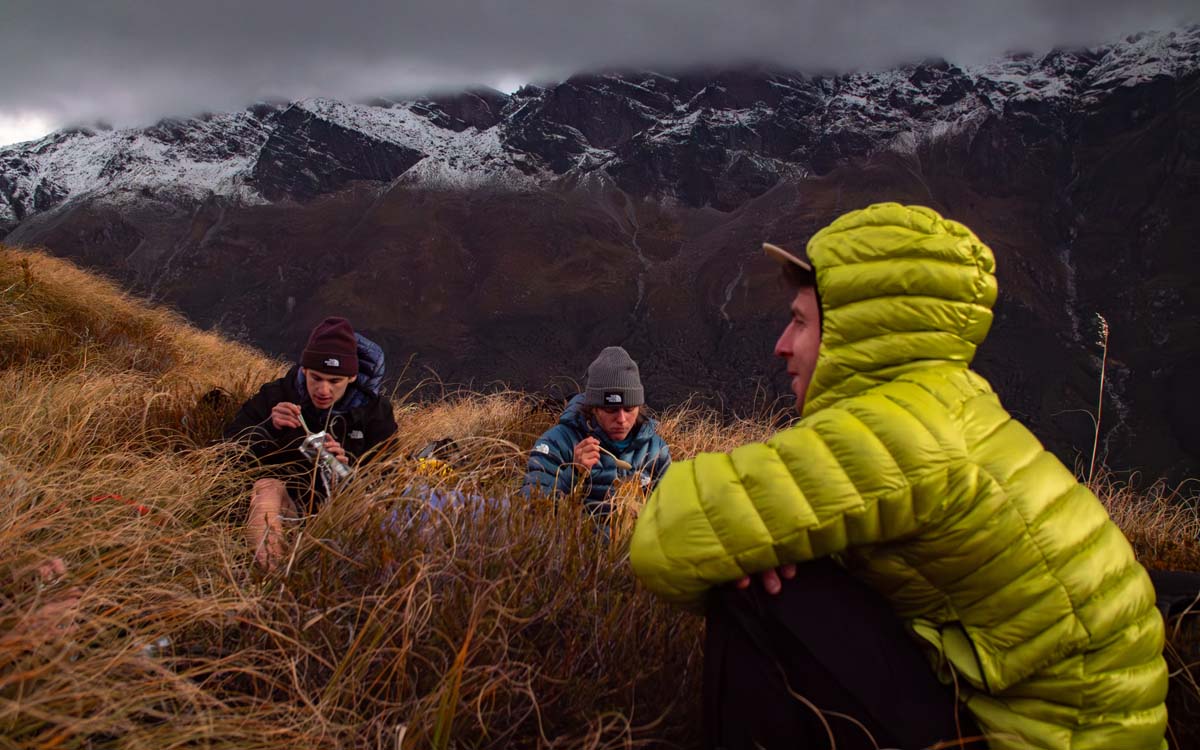
Up until this point, our knowledge consisted mostly of contour lines and satellite images. The climb into the alpine was tough going. Fresh snow lay from around 1100m, meaning a slog up to the ridge. The route directly to O’Learys wasn’t passable in the conditions with unstable snow. Searching for an alternative way, we discovered a route taking us to the ridge line at 1850m. This was steep with some long post-holing sections required in around 50cm of fresh snow. Looking down from the ridge we could see the Joe River, a days walk from where we were. Knowing it wasn’t possible to continue safely in these conditions, the best decision was to turn back, leaving the Joe River for another day.
"It was a hard call to make. I’d been focused on getting into the river since 2019, and to turn back was tough. At the end of the day it’s about being out here, exploring new places but you always want to make sure everyone comes home… the river isn’t going anywhere.” – Mike Dawson
There’s always a silver lining from any change of plan. Within hours a new plan was created. We’d heard whispers of an epic whitewater section in the upper Dart River, near the confluence with Snowy Creek. We spent the next two days working our way further up the Dart River, a physically brutal process traveling another 20km upstream. Late in the evening of day 4 we arrived at Dart Hut on dark, with bodies broken from the load. Immediately, we got stoked with the river. The gradient and flow looked perfect. The team was pumped to get off our feet and onto the water. As the sun rose, we dropped into the Darts upper gorges. With little beta this was slow going. The river dropped upwards of 250m/km in places — seriously steep in kayaking terms, so we expected portaging but what we found was a relentless and unforgiving river bed. A jumble of boulders with virtually no route through. Our speed was down to less that 200m per hour in places, requiring constant teamwork, roping and passing our boats downstream through and over the house-sized boulders. As the day wore on we were physically exhausted.
“That’s the most brutal portaging I’ve done. Our boats were so loaded, and the river never gave us anything. Constantly climbing, jumping from rocks, roping boats. It was a serious day on the river.” – Mike Dawson
With darkness approaching, nowhere to sleep, and the river not relenting downstream, we began the tough tasking of climbing out of the gorge, roping each boat 1 by 1. Around 11pm we were out and able to rest for the night. The following day we re-entered the river further downstream to find the same characteristics. The flow was good but siphons and unrunnable rapids slowed our progress by kayak, meaning we had to portage our way downstream.
Finally, the gradient relented and we found ourselves at the Dayleys Flat Swingbridge, a place we had passed 5 days prior. A sense of relief hit us – while not being the rapids we were searching for, from here on out, everything was navigable in our boats.
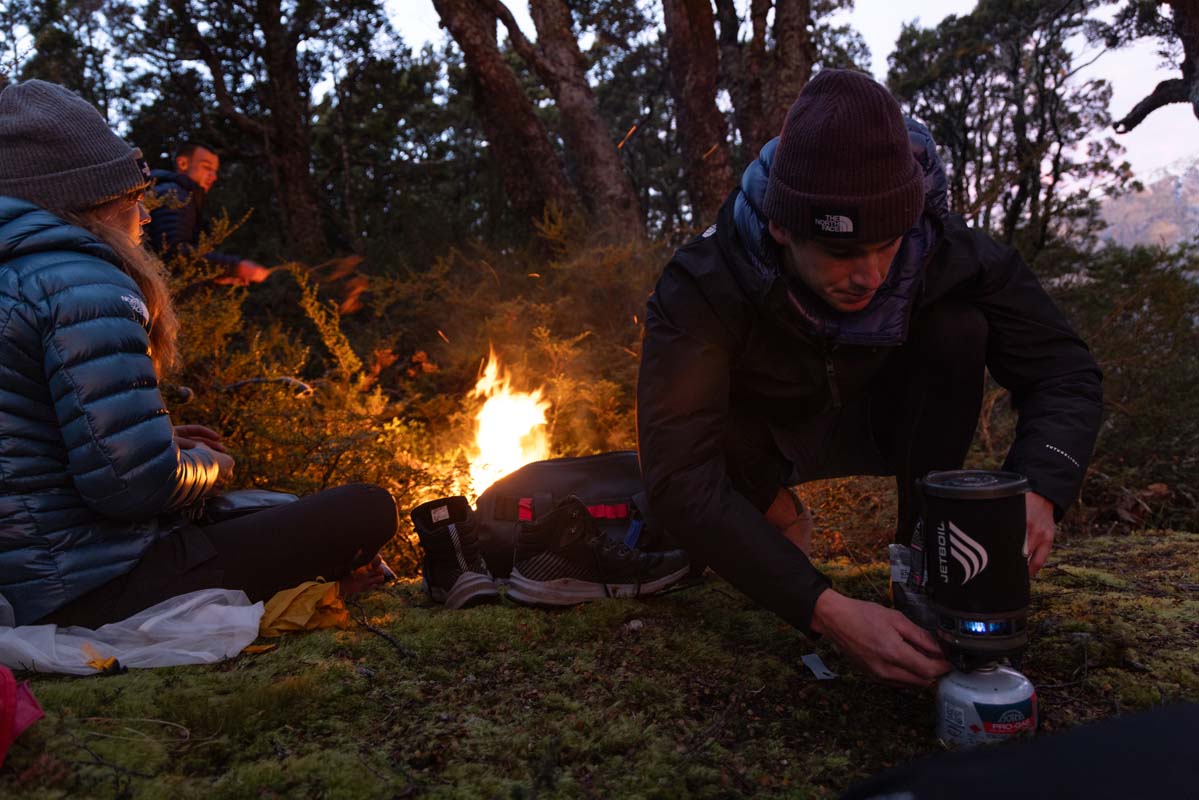
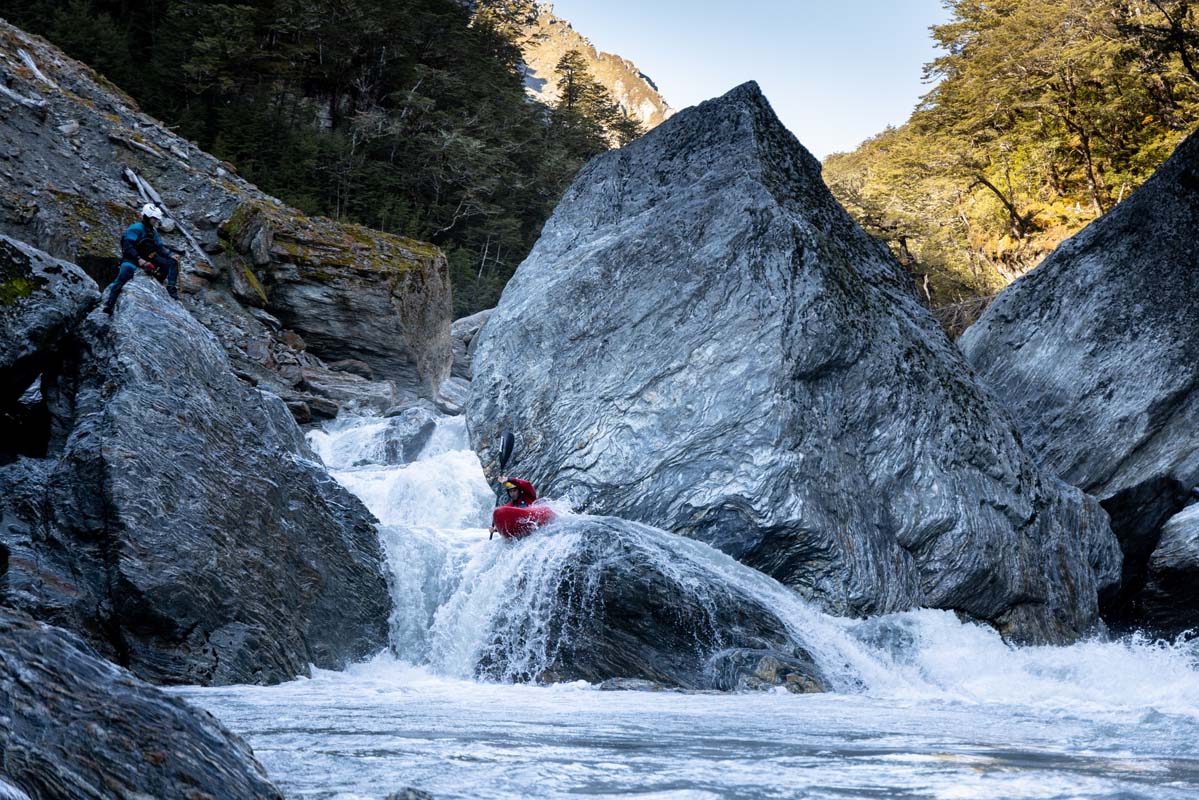
“I was stoked to get to that bridge. The river was unrelenting, and really tough going — and it signalled the end. When you enter a zone like that you expect to find some magic in the gorges, some epic drops or rapids, but the Dart had none. It beats you down a bit, carrying your boat for 6 days hoping to find something. Looking around though, it’s just an epic place to be, and to be somewhere new, undiscovered is amazing — it’s worth the work despite not getting the whitewater treats.” – Mike Dawson
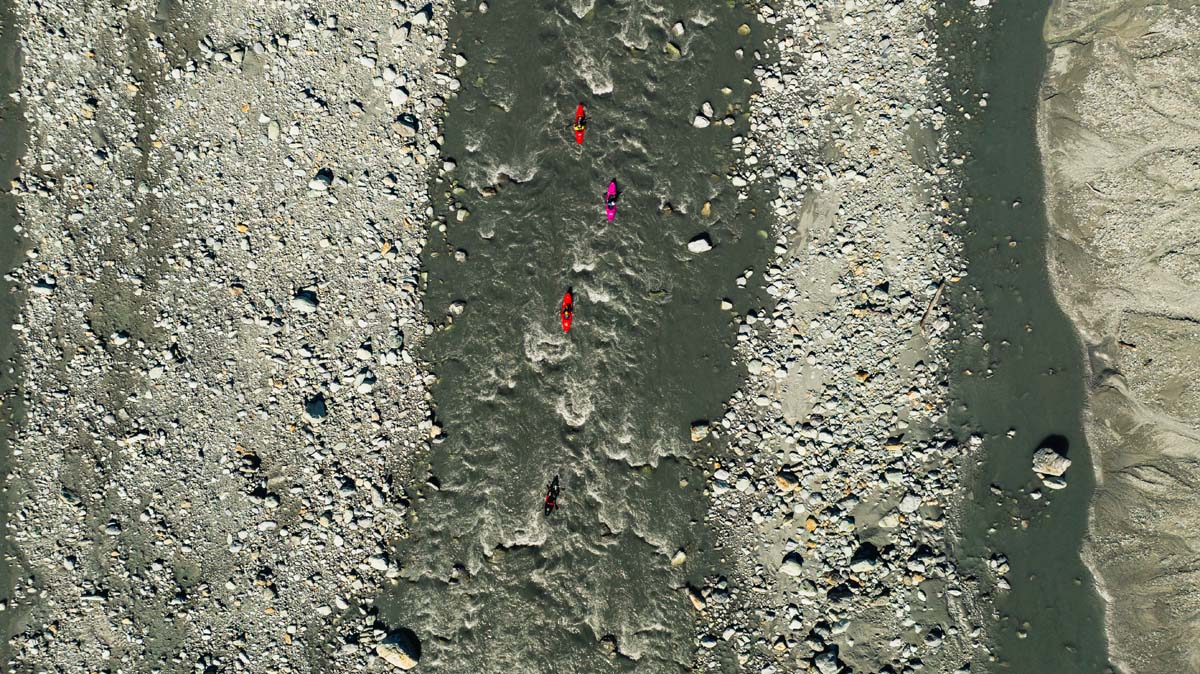
Six days after entering the park we returned to our starting point unsuccessful in getting the first descent of the Joe, but stoked on an epic adventure. This journey was a constant reminder that the wild can be relentless and no matter how much you want something, you’ve got to be patient.
Mike Dawson and his team will be back to attempt the Joe River again. Until then, they will be sharing footage from their first attempt in a short film. Follow Mike Dawson to find out more.
Have an adventure of your own coming up? Applications for The North Face Adventure Grant 2025 are open until Sunday 1 December, 2024. Australian and New Zealand residents are eligible to apply for adventures taking place in 2025 – here or anywhere in the world. Apply now.